

Wind Damage Lifted Shingles: What to Do If Wind Has Lifted Your Shingles

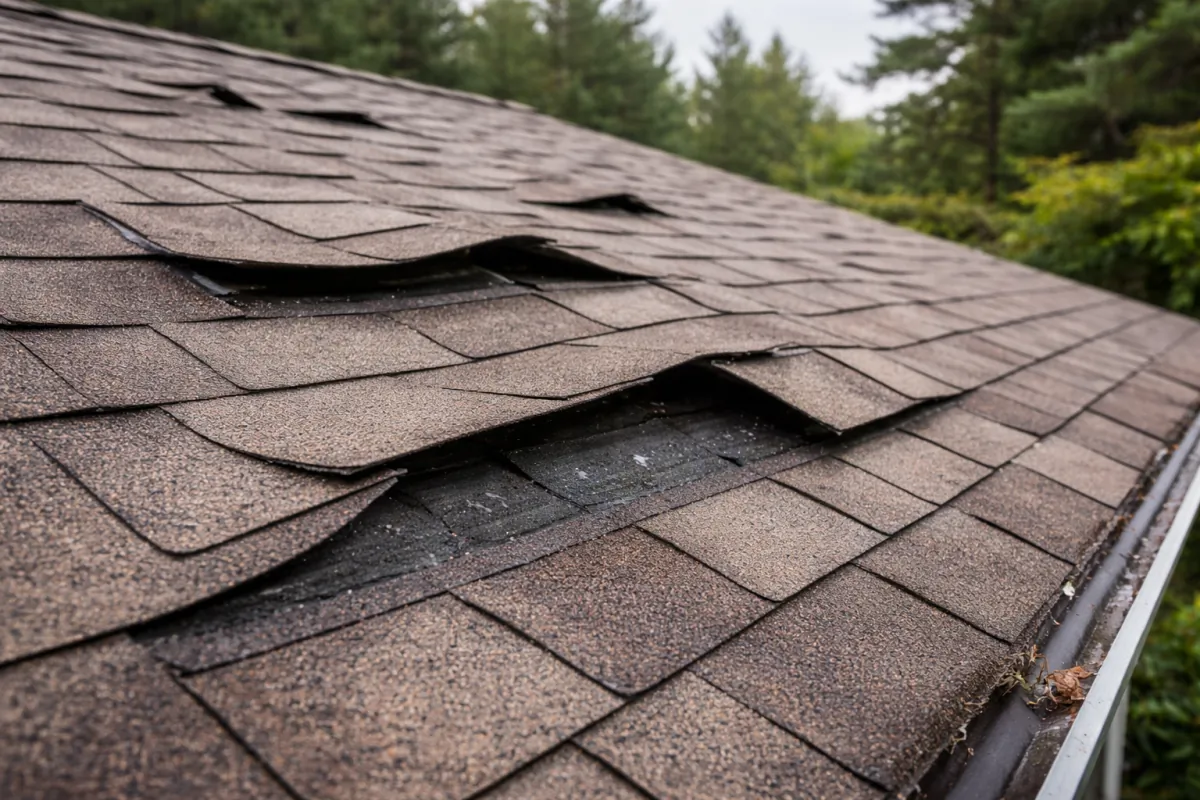
High winds are a regular part of life in Western Washington. When storms roll through, your roof is the first line of defense. If you have noticed wind damage lifted shingles or areas where shingles appear raised or uneven, it is important to understand what that means for your home and what steps to take next.
Lifting shingles are not simply an appearance issue. Once the seal is broken, your roofing system becomes vulnerable to moisture intrusion, long term deterioration, and in some cases structural damage. This guide explains why shingles lift, how serious the problem can become, and how to make informed decisions about repair or replacement.
Why Wind Lifts Roof Shingles
Asphalt shingles are designed to overlap and form a continuous barrier across the roof deck. Each shingle is secured with roofing nails and sealed with a factory applied adhesive strip. When properly installed and activated by warmth from the sun, the seal bonds shingles together and improves resistance against high winds.
Over time, however, exposure to fluctuating temperatures, moisture, and repeated storms can weaken that adhesive bond. Once the seal loosens, wind can catch the edge of a shingle and lift it. Even moderate gusts can begin the process if the roofing materials are aging or if the original installation did not meet manufacturer standards.
While many shingles are rated for winds exceeding 60 miles per hour, real world conditions vary. Roof pitch, attic ventilation, nail placement, and prior minor repairs all affect performance. In Western Washington’s storm patterns, repeated exposure often causes cumulative wind damage rather than one dramatic event.
How to Tell If Shingles Have Been Lifted
Homeowners often first notice lifting shingles from the ground. Edges may appear curled or slightly raised. Certain areas of the roof might look uneven, or shingles may seem misaligned. In more severe cases, loose shingles or missing sections are visible after a storm.
Inside the home, signs may be more subtle. Wind damage lifted shingles can allow water to travel beneath the surface, eventually reaching the roof deck. Over time, you may see ceiling stains, damp insulation in the attic, or peeling paint. These symptoms suggest that moisture has entered the roofing system and should be addressed promptly.
A professional inspection is the most reliable way to determine the extent of the damage. Walking on a compromised roof without proper experience can worsen the issue, so evaluation by a qualified roofing contractor is strongly recommended.
Immediate Steps After Discovering Wind Damage
If you suspect wind damage, safety comes first. Avoid climbing onto the roof, especially when shingles are loose or conditions are wet. From the ground, document visible issues with photographs. If there are interior signs of water intrusion, capture those as well. Clear documentation may help when speaking with your insurance company.
Some homeowners consider installing a tarp. Temporary covering can be helpful if a large area of the roof deck is exposed and rain is imminent. However, improperly secured tarps or additional fasteners driven into the roof can cause more harm than good. Temporary measures should be approached carefully and ideally handled by professionals. Prompt action is critical. Even minor lifting shingles can deteriorate quickly during future storms, particularly in a climate with frequent rainfall.
Can Wind Damage Lifted Shingles Cause a Roof Leak?
Yes. Once a shingle lifts, the protective seal is broken. Wind driven rain can travel underneath the shingle layer and reach the underlayment or roof deck. Over time, this moisture can cause rotting wood, mold growth in attic spaces, insulation damage, and interior staining.
What may appear to be a small area of loose shingles can evolve into structural damage if repairs are delayed. Moisture infiltration does not always present immediate visible signs, which is why timely roof repairs are essential.
Is It Safe to Stay in Your Home If Shingles Are Missing?
In most situations, remaining in your home is safe in the short term, provided there is no active structural compromise. However, urgent professional attention is required if water is entering during rainfall, large sections of shingles are missing, or the roof deck is exposed.
The longer moisture penetrates the roofing system, the greater the risk to framing, insulation, and interior finishes. Even if conditions seem stable, scheduling a prompt inspection helps prevent escalating damage.
Repair or Replacement: How to Decide
Not all wind damage requires a full roof replacement. The appropriate solution depends on the age of the roof, the condition of surrounding shingles, and the overall health of the roofing system.
When damage is isolated and shingles are relatively new, minor repairs may be sufficient. In these cases, a professional can replace affected shingles, ensure proper nail placement, and reseal areas as needed. If shingles are creased, cracked, or torn from their fasteners, replacement of individual shingles is typically necessary rather than attempting to reseal them.
A full roof replacement may be recommended when wind damage is widespread, the roof is near the end of its lifespan, or there are signs of moisture reaching the roof deck. Repeated small fixes on an aging roof often become less cost-effective than investing in a new roofing system designed to withstand long-term exposure.
How Quickly Should Wind-Damaged Shingles Be Repaired?
Addressing wind damage promptly is one of the most important steps you can take. Delays increase the likelihood of interior water damage and may complicate insurance claims. In Western Washington’s damp climate, moisture exposure can accelerate deterioration of both roofing materials and structural components.
Quick intervention reduces repair costs and limits the extent of the damage. Even if the issue appears minor, professional evaluation ensures that hidden problems are not overlooked.
Understanding the Cost of Roof Repairs
The cost of roof repairs depends on several factors, including the extent of the damage, roof accessibility, pitch, and whether the roof deck requires attention. Minor repairs are generally far less expensive than a roof replacement. However, if wind damage affects multiple slopes or reveals underlying issues, costs may increase.
Insurance coverage varies by policy. An inspection report from a qualified roofing contractor can provide documentation that supports discussions with your insurance company and clarifies whether the damage qualifies for coverage.
What Happens During a Professional Repair
A thorough repair process begins with a detailed inspection. Professionals assess shingle condition, fastening patterns, underlayment integrity, ventilation, and the stability of the roof deck. This evaluation determines whether repair or replacement is the most practical long-term solution.
During repairs, damaged shingles are removed and replaced with matching roofing materials whenever possible. Proper roofing nails are installed in manufacturer-specified locations, and approved sealants are applied to ensure a secure bond. The goal is not only to fix visible damage but to restore the integrity of the entire roofing system.
Preventing Future Wind Damage
While no roof can be completely immune to severe weather, proactive maintenance significantly reduces risk. Routine inspections identify lifting shingles early. Proper installation techniques, adequate ventilation, and high-quality materials all contribute to improved wind resistance.
If a roof replacement becomes necessary, selecting shingles with higher wind ratings can provide additional protection against future storms. Long-term performance depends on both product quality and professional installation.
Wind Damage
It is common for homeowners to notice what appears to be a small area of loose shingles after a windy weekend. Without immediate leaks, the issue may seem minor. Weeks later, during steady rain, a ceiling stain appears. Inspection reveals that wind-lifted shingles allowed water to penetrate the underlayment and reach the roof deck.
Situations like this highlight the importance of early action. What could have been a straightforward repair becomes more complex when moisture intrusion is allowed to continue.
What to Do Next
If you suspect wind damage lifted shingles on your roof, the next step is to schedule a professional inspection. An experienced roofing contractor can assess the extent of the damage, explain whether repair or replacement is appropriate, and outline clear options tailored to your home or business.
For more than 60 years, The Roof Doctor has provided comprehensive care for roofing systems throughout Western Washington. As a family-owned and operated company, we are committed to reliable service, customer satisfaction, and long-term protection. Our licensed, bonded, and insured crews handle everything from minor repairs to full roof replacement for residential and commercial properties. We also offer 24/7 emergency service when storms create urgent needs.
Your roof protects everything beneath it. If high winds have left you with lifting shingles or visible damage, do not wait for the problem to worsen. Contact The Roof Doctor today to schedule an inspection and ensure your roofing system is secure, sealed, and ready for whatever weather comes next.